 by Plaza Estates
Daily life in Nerja moves at the pace of the coastline it sits on: unhurried, outdoor, and shaped by light rather than a clock. It suits people who want a walkable town with a real community behind the postcard views, rather than a purely seasonal resort. Mornings tend to start on the promenade or in the old town, and the rhythm barely changes whether it is January or July.
The Balcón de Europa and the old town
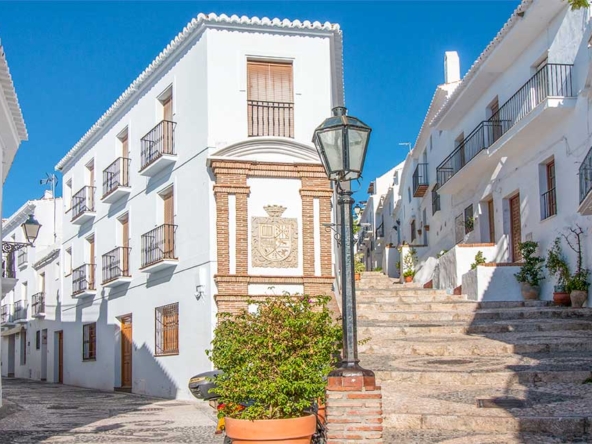
The Balcón de Europa is the natural centre of gravity for Nerja: a wide viewpoint built out over the cliffs, looking along the coast towards the Sierra Almijara on one side and open sea on the other. Around it, the old town unfolds as a compact grid of narrow, whitewashed streets, small squares and balconies dressed in geraniums. It is the kind of place where errands double as a walk, and where a short stroll from the historic centre reaches everyday services, local shops and places to sit outdoors. The scale of the old town means most of daily life happens on foot.
The beaches and the seafront promenade
Nerja’s coastline is broken into a series of coves and open beaches rather than one continuous stretch, so the character changes as you move along it. West of the Balcón de Europa, the beaches tend to be broader and more open, backed by a paved promenade that is popular for walking, running and simply watching the sea. East of the centre, the coastline becomes more textured, with smaller coves tucked beneath cliffs and a quieter, more residential feel. This variety is one of the things residents notice most: it is possible to choose a different stretch of coast depending on mood, without ever leaving the municipality.
The surrounding landscape
Inland, Nerja backs onto the Axarquía and the Sierra Almijara, a mountain backdrop that is visible from much of the town and gives it a distinct sense of enclosure between rock and sea. This landscape shapes the light and the microclimate as much as it shapes the view, and it is a constant presence rather than a place you visit once. For residents, the mountains are simply part of the daily scenery, glimpsed from a terrace, a car window or the walk home.
The rhythm of the year
Nerja has a clear seasonal pulse, busier in the warmer months and noticeably calmer through autumn and winter, but it never becomes a ghost town. Cafés, shops and the weekly market continue to operate year-round, and the mild coastal climate means outdoor life rarely disappears entirely, even in the quieter months. Many residents describe the shoulder seasons, spring and autumn, as the moments when the town feels most like itself: mild, walkable and less crowded, with the same views and the same sea.
A genuinely international community
Nerja’s population is unusually international for a town of its size. According to the municipal population register (padrón), roughly a third of residents are foreign nationals, representing more than 90 different nationalities. What stands out locally is how broad that mix actually is: alongside a long-established British community, there is a notable Scandinavian presence, together with residents from across northern and central Europe. In practice, this means English is widely understood, but the town does not belong to any single expatriate group, and everyday life reflects that mix in its shops, associations and social circles.
| Area | Character | Everyday amenities |
|---|---|---|
| Balcón de Europa and old town | Compact, pedestrian, historic centre | Local shops, cafés, weekly market nearby, walkable services |
| Torrecilla, Chaparil and Punta Lara (west) | Open beachfront, residential and holiday mix | Promenade access, everyday shops, proximity to the beach |
| Parador, Carabeo and upper Burriana (east) | Elevated, quieter, sea-view residential | Smaller coves nearby, residential streets, some local services |
| Capistrano (north) | Hillside residential area close to the centre | Mainly residential, short distance to town amenities |
| Maro (east) | Separate village-style pedanía with its own identity | Village amenities on a smaller scale, rural surroundings |
Living in Nerja: the trade-offs
What residents tend to value
- A walkable old town where daily errands double as time outdoors
- Varied coastline, from open beaches to quieter coves, within one municipality
- A mountain backdrop that gives the town a distinct, enclosed feel
- A genuinely mixed international community rather than a single expatriate enclave
- A year-round rhythm that softens rather than disappears out of season
What to weigh up
- Visitor numbers rise noticeably in the warmer months, changing the pace of the centre
- The old town’s narrow streets and hillside areas involve a fair amount of walking and steps
- Being a smaller coastal town, some services are more limited than in a larger city
- Property and rental demand can vary between areas of town, so local advice matters
Frequently asked questions
What is Nerja like to live in day-to-day?
Day-to-day life centres on walking: to the Balcón de Europa, along the promenade, or through the old town for errands. It is a compact, outdoor-oriented routine rather than one built around a car, particularly for anyone based in or near the historic centre.
Is Nerja very seasonal, or does it feel alive all year?
Nerja is busier in the warmer months but does not close down out of season. The market, local shops and cafés continue year-round, and the mild coastal climate keeps outdoor life going through autumn and winter, just at a calmer pace.
How international is the community?
Very. Municipal population records show roughly a third of residents are foreign nationals from more than 90 countries, with a genuinely broad mix that includes long-established British and Scandinavian communities alongside many other nationalities.
Which part of Nerja suits a permanent move best?
It depends on priorities: the old town suits those who want to walk everywhere, the western beach areas suit open promenade living, the east and Capistrano suit those wanting quieter, more residential surroundings, and Maro suits a smaller, village-style pace a short distance from the centre.
What healthcare is available for residents?
Residents access public healthcare through the Servicio Andaluz de Salud (SAS), which assigns a health centre and hospital area according to the resident’s registered address. Anyone relocating should confirm their specific situation directly with SAS once registered locally.
Ready to explore what life in Nerja could look like for you? Browse our listings at https://plazaestates.es/city/nerja/ · Plaza Estates · +34 952 524 191 · [email protected]