
 by Plaza Estates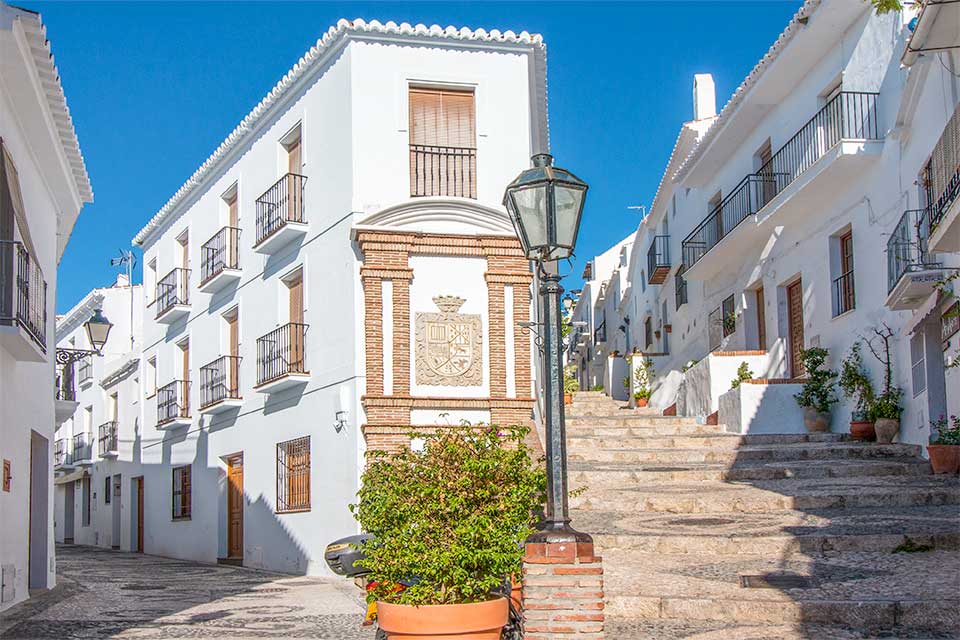
Frigiliana sits inland, a short drive up from the coast, its whitewashed houses climbing a hillside on the southern flank of the Sierra Almijara. Daily life here follows the pace of a hill village rather than a beach town: mornings begin on steep, quiet streets, and routines are shaped by slopes and long views rather than sand underfoot. It suits people drawn to quiet, character and a strong sense of place.
A hillside village, not a coastal one
It is worth being clear about geography from the outset: Frigiliana is not on the beach. It lies a few kilometres inland from the coastal town of Nerja, set at altitude on the lower slopes of the Sierra Almijara. There is no seafront promenade and no beach within the village itself. Reaching the coast means a short drive down through the countryside, so anyone picturing a stroll to the sand each morning should reconsider what daily life here actually involves. What Frigiliana offers instead is elevation, shade in summer, cooler evenings, and a village fabric built for walking rather than driving through its centre.
The old town and the Barribarto
The historic core, including the area known locally as the Barribarto, is a dense knot of narrow, cobbled lanes, whitewashed façades and steps that climb between houses rather than roads that run past them. Many of these streets are pedestrian by nature, too narrow or too steep for a car, and some homes are reached only on foot, up flights of stairs. This gives the old town its atmosphere, but it also has practical consequences for everyday living: carrying shopping, moving furniture, arranging deliveries or simply getting home after dark all take longer and require more effort than they would on a flat street. Anyone considering a house in this part of the village, particularly those with reduced mobility or small children, should think carefully about how many steps separate the front door from the nearest point a vehicle can reach.
The lower village and everyday amenities
Below and around the historic core, the village extends into flatter, more recently built streets where cars can park closer to the house and daily errands are simpler. This is generally where day-to-day amenities sit: small shops, everyday services and the practical infrastructure that residents rely on. Healthcare in Spain is organised through the Servicio Andaluz de Salud (SAS), which assigns each resident a health centre and hospital area according to their registered address, so the specific centre and hospital that apply depend on exactly where in or around the village a person lives. For many residents, especially those who want easier day-to-day logistics without giving up the character of the wider village, this lower part offers a practical middle ground.
Mountains as backdrop, sea as a view
The surrounding countryside is defined by the Sierra Almijara rising behind the village and terraced slopes of olive and almond trees falling away below it. This landscape is part of daily life rather than something visited: it frames the view from windows and terraces, shapes the light through the day, and provides the quiet backdrop that draws people to a village like this in the first place. Despite sitting inland, many points within Frigiliana offer clear views down toward the Mediterranean, a reminder of how close the coast remains even though the village itself belongs firmly to the mountains rather than the shore.
The rhythm of the year
Life in Frigiliana follows the wider rhythm of inland Andalusia: warm, dry summers when the elevation offers some relief from the heat lower down, and mild winters with cooler nights than the coast. The surrounding groves shift with the agricultural calendar, from blossom in the cooler months to harvest later in the year, giving the landscape around the village a visible sense of the seasons turning. The village itself quietens and fills at different points through the year as visitors come and go, while the core rhythm of residents’ daily life, work, errands, walking the steep streets, stays fairly constant underneath those seasonal changes.
A village shared by neighbours old and new
Frigiliana is home to long-established Andalusian families alongside a significant number of international residents who have chosen to settle here permanently. This mix shows up in the everyday texture of the place, more than one language heard in the street, a broad range of accents at the local shops, and a community that has grown used to blending local custom with newer arrivals. It tends to suit people who want to integrate into a genuine Spanish village rather than an enclave built primarily around newcomers, while still finding a welcoming international network already in place.
| Part of the village | What it offers day to day |
|---|---|
| Old town / Barribarto | Historic character, cobbled and stepped streets, limited or no vehicle access to some homes |
| Lower village | Flatter streets, easier parking, everyday shops and services |
| Surrounding countryside | Olive and almond groves, mountain backdrop, distant sea views |
| Community | A blend of long-settled local families and international residents |
Weighing life in Frigiliana
Advantages
- Genuine hillside village character, with whitewashed streets and a strong sense of place
- Cooler temperatures and pleasant light thanks to its elevation and mountain setting
- A settled, mixed community of local and international residents
- Views combining mountain landscape and distant sea from many points in the village
Trade-offs
- No beach or seafront within the village; the coast requires a drive
- Steep, narrow, stepped streets in the old town affect access and daily logistics
- Some homes are reachable only on foot, which matters for mobility and moving belongings
- Day-to-day amenities are more limited than in a larger coastal town
Frequently asked questions
Is Frigiliana a beach destination?
No. Frigiliana is an inland hillside village on the southern slope of the Sierra Almijara, without its own beach or seafront. The coast lies a short drive away, so residents typically travel down to reach the sea rather than walking to it from the village itself.
What is it like getting around the old town?
The historic core, including the Barribarto, is built around narrow, cobbled, often stepped streets that were never designed for vehicles. Getting around generally means walking, and some homes are accessible only on foot, so mobility and the practicalities of daily errands are worth considering carefully before choosing a house there.
Is Frigiliana a practical base for reaching the coast regularly?
It can be, depending on how often someone needs to reach the coast and how comfortable they are with a short daily or regular drive down from the village. Those who plan to spend most of their time by the sea may find a coastal address more convenient than an inland hillside one.
What healthcare is available in Frigiliana?
Frigiliana has its own SAS primary-care consultorio. It forms part of the Nerja basic health zone, with Hospital de La Axarquía as its reference hospital.
Is it easy to integrate into the international community there?
Frigiliana has a long-established international population living alongside local Andalusian families, so newcomers generally find an existing network of residents in a similar position. It remains a genuine Spanish village rather than an enclave, so integration also tends to involve engaging with the local community and language over time.
Ready to explore what life in Frigiliana could look like for you? Browse our listings at https://plazaestates.es/city/frigiliana/ · Plaza Estates · +34 952 524 191 · [email protected]
