 by Plaza Estates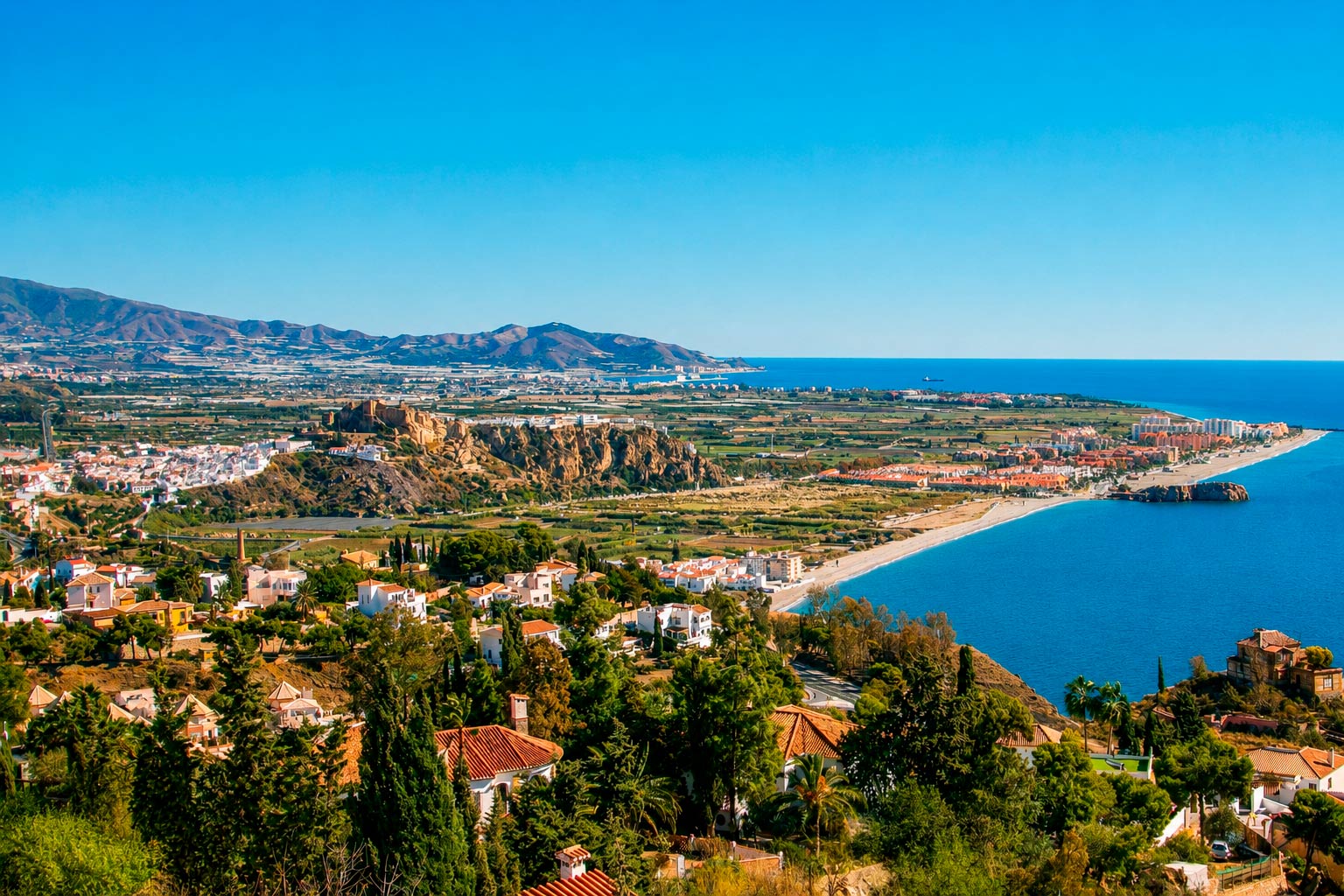
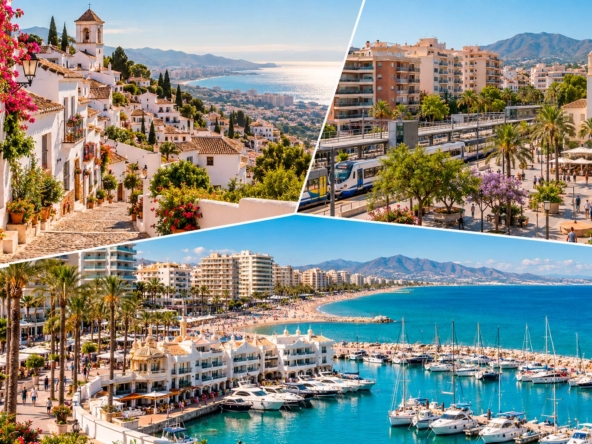
Salobreña is one of the most visually striking towns on the entire Andalusian coast. The old town sits on a rocky outcrop that rises sharply from a coastal plain of sugar cane fields, crowned by a Moorish castle and a cluster of whitewashed houses that tumble down to the plain below. It is a town that resists easy categorisation: part Andalusian village, part beach resort, part agricultural community — and all within thirty minutes of Nerja and less than an hour from Granada city. For buyers seeking something genuinely different from the developed resort strips of the western Costa del Sol, Salobreña offers a compelling alternative.
Why Salobreña?
Salobreña is part of the Costa Tropical of Granada — the Junta de Andalucía’s designation for the Granada province coast between Nerja to the east and Motril to the west. Like Almuñécar further west, it benefits from the area’s subtropical microclimate: sheltered from cold northern winds by the Sierra Nevada, warmed by the Mediterranean, and mild enough in winter to support tropical fruit cultivation in the surrounding fields.
What distinguishes Salobreña from the coastal towns to its west is its authenticity. The international buyer community is smaller and less established than in Almuñécar or Nerja, which means the town retains more of its day-to-day Spanish character. The pueblo on the rock operates at a genuinely local rhythm — markets, festivals, traditional bars — while the beach area below provides the seasonal tourist infrastructure that is common to coastal Andalucía. For buyers who want the beach and the climate without the resort atmosphere, this combination can be exactly what they are looking for.
The town’s geography: pueblo, plain and coast
Salobreña’s geography defines its property market. The municipality separates into three physically distinct zones, each with a different character and lifestyle proposition.
The old town (El Peñón)
The historic town on the rock is Salobreña’s defining feature and its most photographed setting. The streets are pedestrianised and steep — cars cannot access most of the old town — with whitewashed houses, bougainvillea-covered walls and the Castillo Árabe de Salobreña at the summit. Properties here are primarily traditional houses, many of which have been restored or are candidates for renovation. They offer the authentic Andalusian village experience: quiet, atmospheric and visually spectacular, but with practical limitations (no car access, limited parking nearby, steps everywhere). The old town suits buyers for whom lifestyle and character take precedence over practicality.
The lower town and outskirts
Around the base of the rock and spreading onto the coastal plain, the lower town and newer residential areas offer a more accessible property stock — apartments and townhouses with car access, closer to the supermarkets, shops and services that make everyday living practical. Properties in this zone are generally more affordable than equivalent-sized homes in beach-front positions or in the old town, and the area functions as the year-round commercial and residential hub of the municipality.
The beach area
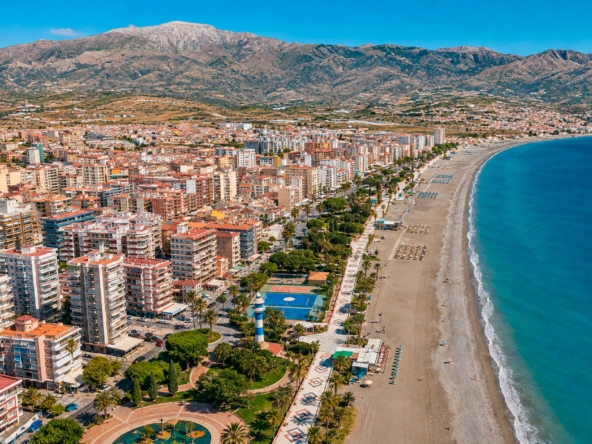
Salobreña’s beaches are several kilometres south of the old town, separated from the pueblo by the sugar cane plain. The beach area — including Playa de Salobreña, Las Charcas and El Peñón beach — has a more typical resort character during the summer season, with beach bars, restaurants and apartments oriented toward the holiday rental market. Properties here are predominantly apartments, and proximity to the beach is the primary value driver. The beach zone has a more seasonal flavour than the town itself.
The property market
Salobreña’s property market is smaller and less liquid than those of Nerja or Almuñécar to the east. The market is dominated by Spanish buyers, with international buyers representing a smaller proportion of transactions — which means the market is less exposed to external currency and demand shocks, but also less supported by the deep international buyer pool that drives premium pricing in the more established resort towns.
The Colegio de Registradores publishes the Málaga province transaction average each quarter in its Estadística Registral Inmobiliaria — the most reliable benchmark for actual agreed prices in the region. Salobreña, as a smaller Granada province coastal market with a lower international profile, generally operates at more accessible price levels than the Málaga coastal benchmark, offering meaningful entry opportunities in both the old town and the beach area for buyers with a longer-term perspective and an appreciation for what makes this town different.
Prices vary significantly within the municipality depending on property type, condition, whether a restoration is required, and access. Old town properties requiring full renovation may trade at the lowest absolute prices in the municipality, but the cost of restoration and the practical limitations of car-free access should be factored into any total-cost assessment. Beach-adjacent apartments with summer rental potential sit in a different price bracket from inland residential stock.
| Zone | Property type | Market character |
|---|---|---|
| Old town (El Peñón) | Traditional houses, some requiring restoration | Authentic; lifestyle buyer; limited car access; character premium |
| Lower town / outskirts | Apartments, townhouses | Practical; year-round; most accessible price levels |
| Beach area | Apartments; some detached houses | Seasonal; rental potential; beach proximity premium |
Healthcare, schools and connectivity
Healthcare is provided through the Servicio Andaluz de Salud (SAS). The nearest full hospital is Hospital de Motril, approximately 10 kilometres west of Salobreña — significantly closer than for buyers further east along the coast in Nerja or Almuñécar. Motril also provides the main commercial services for the area. For specialist hospital care, the reference centres are in Granada city (approximately 65 kilometres north) or Málaga (approximately 90 kilometres west).
Schools: Salobreña’s local schools are Spanish-curriculum with bilingual programmes. The nearest international school is Almuñécar International School, approximately 15 kilometres to the east. Families requiring full international curriculum schooling (UK, IB) should research transport options carefully, as the commute from Salobreña to schools in the Nerja or Almuñécar area requires either a car or a long bus journey.
Connectivity: Málaga International Airport is approximately 85–90 kilometres to the west, around one hour by car via the A-7 or AP-7 motorway. Granada Airport provides an alternative with shorter road distance (approximately 60 kilometres), though with fewer international direct routes. There is no rail connection to Salobreña or the Costa Tropical. Motril, 10 kilometres west, is the main transport hub for the area. Car ownership is essentially non-negotiable for daily life in Salobreña, particularly for the old town and the more scattered rural areas.
Pros and cons
Pros
- Visually extraordinary setting — old town on the rock is among the most dramatic in Andalucía
- Subtropical climate with mild winters; sugar cane, avocado and tropical fruit cultivation nearby
- Genuinely Spanish character — less developed international resort atmosphere than the Costa del Sol
- Closer to Motril’s hospital provision than other eastern Costa Tropical towns
- More accessible price levels than established Málaga coastal markets in most segments
- Close to both Granada city and the Sierra Nevada — year-round cultural and outdoor offer
Cons
- Old town has no car access — a significant practical limitation for full-time residence
- International buyer community is small and the market is less liquid than Nerja or Almuñécar
- Beach is separated from the old town by the cane plain — the two zones do not feel integrated
- Limited choice of international schooling within easy commuting distance
- No rail connection; complete car dependency for most errands
- Summer season makes the beach area lively; the old town remains quieter, which may suit some buyers and not others
Frequently asked questions
Is Salobreña a good place for short-term holiday rental?
Beach-area properties in Salobreña can generate short-term rental income during the summer season, when the beach draws domestic Spanish tourists in particular. The market is less established and less deep than in Nerja or the western Costa del Sol, and occupancy rates outside the July–August peak are lower. Buyers considering a tourist rental strategy should research current occupancy data for the specific zone and property type before committing, and verify VFT registration requirements under Andalucía’s tourist rental framework.
Can I drive to the historic old town?
Vehicle access to most of El Peñón — the old town on the rock — is not possible. The streets are narrow, steeply inclined pedestrian lanes. Residents and property owners park in the lower town and walk up. This is an important practical consideration for those buying in the old town: furniture deliveries, renovation materials and everyday shopping all require carrying uphill. Many buyers regard this as an acceptable trade-off for the character and quietness that car-free streets provide; others find it a decisive drawback.
How close is Salobreña to Nerja and the eastern Costa del Sol?
Salobreña is approximately 35 kilometres west of Nerja along the A-7 coastal road, a journey of around 30–40 minutes in normal conditions. The route passes through Almuñécar and La Herradura. The connection to the Málaga motorway network via the AP-7 or A-7 is straightforward, making Málaga airport (approximately 90 km) the natural international gateway. Granada city is approximately 65 kilometres north via the A-44 motorway — under an hour in light traffic.
Are there renovation opportunities in the old town?
Yes — the old town has a proportion of properties in various states of renovation need, and some buyers are drawn specifically by the opportunity to acquire a traditional house and restore it to a high standard. The rewards can be significant in terms of the final product: old town houses with terraces, rooftop terraces (azoteas) and views over the cane plain and the sea are genuinely striking. The risks are also real: structural surveys are essential, renovation costs in a car-free environment are higher than in standard urban properties, and planning restrictions in protected old town zones can limit what changes are permitted. Independent legal and architectural advice before purchase is essential.
Ready to explore property in Salobreña and the Costa Tropical? Browse our listings at plazaestates.es
Plaza Estates · +34 952 524 191 · [email protected]