 by Plaza Estates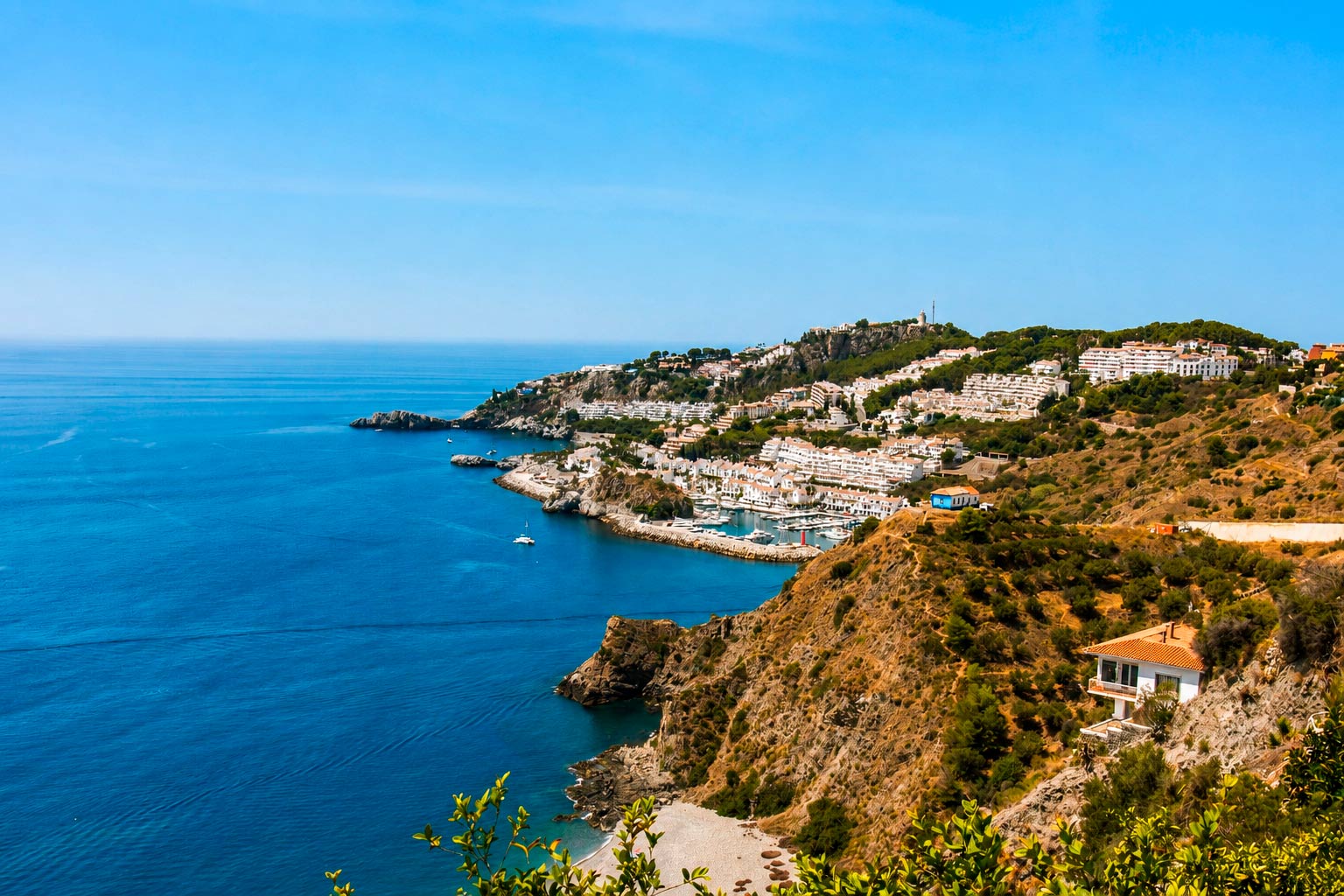
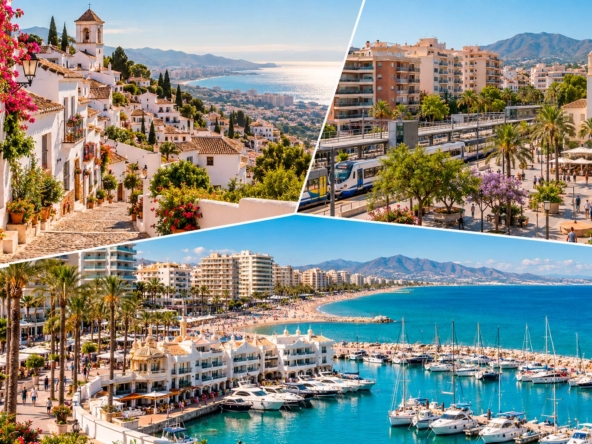
Almuñécar and La Herradura occupy a stretch of the Costa Tropical of Granada — a coastline that is geographically close to the Costa del Sol but administratively and climatically distinct. The municipality sits approximately 25 kilometres east of Nerja and around 80 kilometres from Málaga, in the province of Granada. Its subtropical microclimate — warm winters, mild summers, and conditions suitable for avocado, mango and cherimoya cultivation — sets it apart from the Málaga coastal towns. The international buyer community has grown steadily over the past decade, drawn by lower price points than the Málaga coast and a genuinely different character from the established resort strip to the west.
Why Almuñécar and La Herradura?
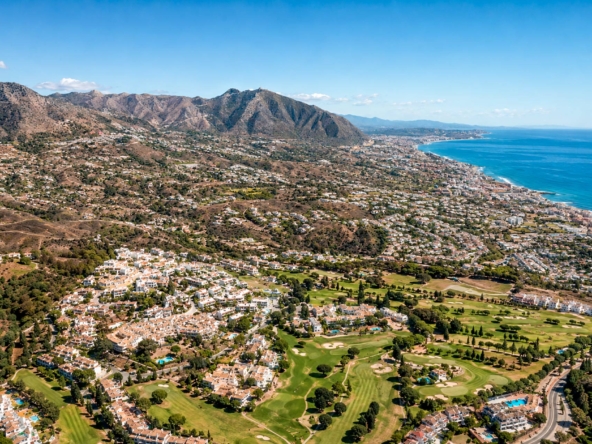
The Costa Tropical of Granada (Costa Tropical is the formal denomination used by the Junta de Andalucía for this coastline) offers several qualities that attract buyers seeking an alternative to the more developed Costa del Sol markets. The coastline is less urbanised, the international community has been growing without the over-development that characterises some areas further west, and the combination of mountain backdrop and Mediterranean sea creates dramatic scenery that is rare on the flat coastal plains to the west of Málaga.
Almuñécar itself has genuine depth as a town — a Moorish castle (Castillo de San Miguel), a well-preserved Roman fish salting factory (Factoría de Salazones), Phoenician remains, a functioning local market and a town centre that operates year-round rather than shutting down outside the summer season. For buyers who want authentic Andalusian town life alongside beach access and a resident international community, this combination is increasingly rare on the southern Spanish coast.
Key areas within the municipality
Almuñécar town centre
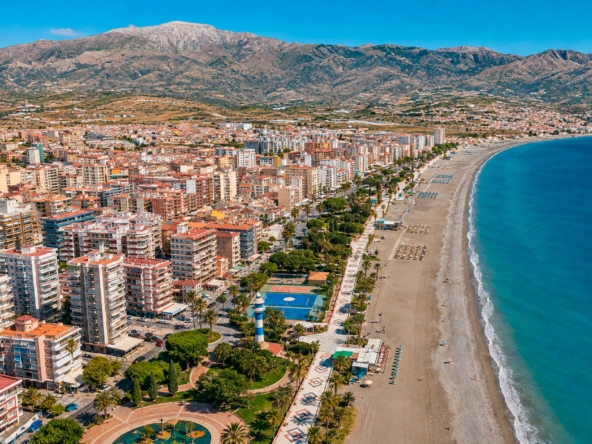
The town centre combines the historic old town (with the castle, the Roman antiquities and the traditional market) and the newer residential and commercial areas along the seafront promenade and the Paseo de Cotobro. Apartment stock here ranges from older blocks built in the 1970s and 80s to more recent residential developments. Walkability is a genuine feature — bars, restaurants, shops and the beach are within easy reach of most central properties. Entry prices in the town centre are generally more accessible than the hillside villa belt, and the area has a stable year-round population of both Spanish and international residents.
Cotobro and the hillside villa zones
Rising above the town to the west, the Cotobro district and the broader hillside areas around the municipality offer villa properties with panoramic sea views and more space than the central apartment stock. This is where buyers looking for independent houses with gardens, pools and privacy are most likely to find what they need. Properties in these hillside zones command premiums for views, orientation and proximity to the beach, and can vary significantly in price depending on condition, plot size and the quality of the sea panorama.
La Herradura
La Herradura is a distinct coastal settlement within the Almuñécar municipality, approximately 7 kilometres east of the town centre. It occupies a sheltered bay — the horseshoe shape for which it is named — and has developed a strong reputation among the diving, windsurfing and sailing community. Marina del Este, adjacent to La Herradura, is the principal marina for this stretch of coast. The character of La Herradura is quieter and more village-like than Almuñécar proper, with a smaller permanent population but an active water sports scene and strong summer occupancy.
Property in La Herradura ranges from apartments on and near the beach to villas on the Punta de la Mona headland with dramatic views over the bay and the Nerja coast. The Punta de la Mona area is particularly sought after for its position, with some properties on elevated plots with sea views in multiple directions. Prices in La Herradura can sit at or above Almuñécar town levels depending on proximity to the bay and the quality of the views.
The property market and pricing
Almuñécar falls within the province of Granada, not Málaga — a distinction that matters for market data. The Colegio de Registradores publishes the Málaga province transaction average each quarter in its Estadística Registral Inmobiliaria, reflecting the well-established and liquid market to the west. The Granada coastal market has historically offered lower average prices per square metre than the Málaga coast — a function of lower international profile, a smaller established expatriate community and proximity to, but not identity with, the Costa del Sol brand.
In practice, the Almuñécar market is bifurcated. The bulk of the apartment stock — older builds in the town centre and around the beaches — trades at accessible price points, offering meaningful entry opportunities for buyers who prioritise location and lifestyle over modern specification. The hillside villa market and the Punta de la Mona segment are distinct: demand from buyers who specifically seek views, space and the quality of position in La Herradura can produce values that compare more closely with parts of the established Málaga coastal market than the overall municipal average would suggest.
| Segment | Character | Relative positioning |
|---|---|---|
| Town centre apartments (older stock) | Accessible; year-round; walkable | Most accessible entry point in the municipality |
| Cotobro / hillside villas | Views; space; privacy; garden | Premium over centre; varies by views and condition |
| La Herradura bay (apartments) | Beach proximity; village feel; water sports | In line with or above town centre depending on floor and sea view |
| Punta de la Mona (villas) | Elevated; panoramic; prestige headland location | Highest values in the municipality for quality product |
Specific price per square metre figures for Almuñécar’s zones are not available from directly-verified primary sources. Buyers should use the range estimates above as orientation and obtain current evidence from local agents active in each segment before committing.
Healthcare, schools and connectivity
Healthcare is provided by the Servicio Andaluz de Salud (SAS). The nearest hospital with full services is Hospital de Motril, approximately 25 kilometres east along the coast. For complex or specialist treatment, the main reference hospitals are in Granada city (approximately 65–70 kilometres) and Málaga (approximately 80 kilometres). Private clinics and GP services serving the international community are present in Almuñécar town.
International schooling: Almuñécar International School is the nearest bilingual and internationally-oriented school to both Almuñécar and the Nerja area, and is frequently cited by families relocating to this stretch of coast. Spanish state schools in the municipality provide bilingual programmes. Families with secondary-age children requiring specific curriculum delivery (UK, IB, etc.) should research availability and transport options carefully.
Connectivity: Málaga International Airport is approximately 75–80 kilometres to the west, accessible via the A-7 coastal road or the inland motorway route; travel time is approximately one hour by car in normal conditions. Granada Airport is approximately 60–65 kilometres inland (though international connections there are more limited than Málaga). There is no rail connection to Almuñécar. The A-7 and the dual carriageway sections of the coastal road provide reasonable road links to Nerja (approximately 25 km east) and to the motorway network to the west.
Pros and cons
Pros
- Subtropical microclimate — one of the mildest winter climates in Europe
- Genuine town with history, market, year-round community and authentic Andalusian character
- More accessible price points than comparable Málaga coastal markets in most segments
- La Herradura bay: outstanding water sports and a quieter, village-like lifestyle
- Growing international community without the over-development of the western Costa del Sol
- Close to Nerja and the Parque Natural Maro-Cerro Gordo for those who value access to natural landscapes
Cons
- Older apartment stock in the town centre may need updating; specification below that of Costa del Sol new-builds
- Hospital provision is in Motril rather than locally — healthcare journey times can be significant
- No rail connection; car dependency for most errands outside the town centre
- Smaller rental market than the more established Costa del Sol resort towns, which can affect liquidity for those buying partly as investment
Frequently asked questions
Is Almuñécar on the Costa del Sol?
Technically no — Almuñécar is on the Costa Tropical of Granada, which is the Junta de Andalucía’s designation for the coastline of the Granada province. The Costa del Sol designation applies to the Málaga province coast. In practice, the two coastlines are adjacent and buyers often consider them together, but they are in different provinces with different administrative contexts.
What is the climate really like in Almuñécar?
The Costa Tropical of Granada has one of the most exceptional microclimates in Europe. The combination of the Sierra Nevada mountain range to the north (blocking cold northern air) and the Mediterranean to the south creates conditions warm enough to support tropical fruit cultivation — avocado, mango, cherimoya and passionfruit are commercially grown in the area. Winter temperatures rarely drop below 12°C, and summer temperatures are moderated by sea breezes more effectively than in hotter inland areas. The area receives significantly more annual sunshine hours than northern Europe.
Is La Herradura a good place to buy for water sports?
Yes — La Herradura’s sheltered bay is particularly well-regarded for diving (the rocky sea floor and marine life in the area are a draw) and the bay is one of the most consistent windsurfing spots on the southern Spanish coast. Marina del Este provides boat mooring and the range of services associated with an active sailing and watersports community. Buyers drawn by water sports tend to prioritise La Herradura specifically; those seeking a wider range of town amenities typically prefer Almuñécar centre.
How does buying in Almuñécar compare to buying in Nerja?
The two towns are approximately 25 kilometres apart and share the subtropical end of the Andalusian coast, but they have distinct characters. Nerja’s international buyer community — particularly British, Scandinavian and German — is larger and more established, with a correspondingly more liquid and somewhat higher-value property market. Almuñécar offers more accessible entry prices in most segments and a slightly less-developed international buyer profile, which may appeal to buyers seeking a less tourist-oriented community. Both towns operate year-round and have genuine local commercial and social infrastructure.
Ready to explore property in Almuñécar and La Herradura? Browse our listings at plazaestates.es
Plaza Estates · +34 952 524 191 · [email protected]