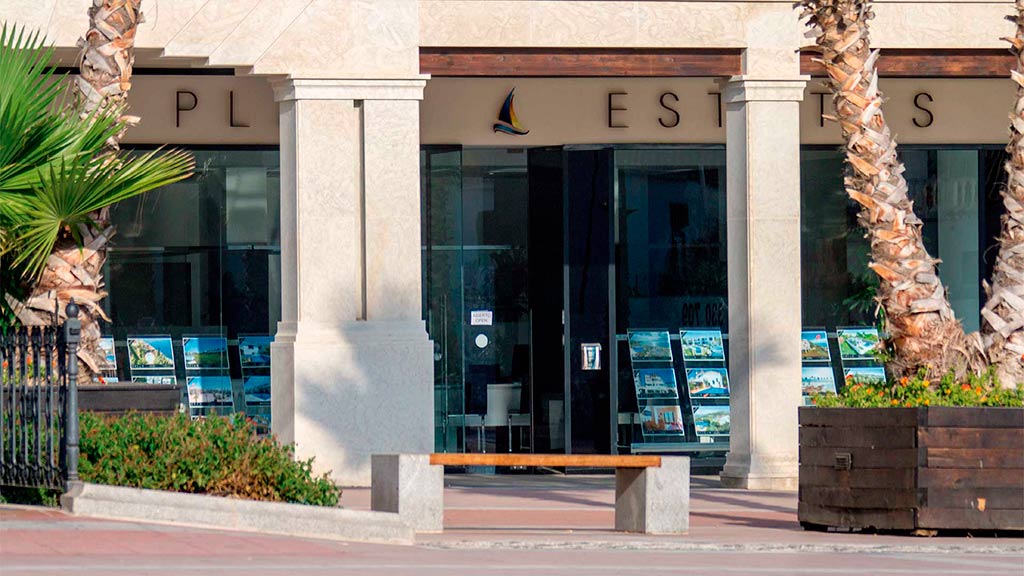
 by Plaza Estates
Buying property on the Costa del Sol or Costa Tropical as a non-resident with Spanish bank financing is available to many overseas buyers, subject to the lender’s eligibility and affordability assessment. Lenders offer dedicated non-resident mortgage products, though terms differ from those available to Spanish residents — particularly regarding loan-to-value ratios, documentation requirements, and the regulatory review period. This guide sets out what to expect.
Can Non-Residents Get a Mortgage in Spain?
Non-residents — whether EU citizens or nationals from outside the EU — can apply for a Spanish mortgage to purchase property. The majority of Spain’s main banks and specialist lenders have dedicated products for foreign buyers. Foreign buyers are a significant part of the market on the Costa del Sol: according to the Colegio de Registradores, they accounted for 32.8% of all property purchases in Málaga province in 2025. It is worth being clear about what that figure means, though — it measures completed purchases, not mortgages. The proportion of those buyers who finance with a Spanish mortgage is a separate question, and at national level foreign buyers make up only a modest share of new residential mortgages. Many overseas purchases are wholly or partly funded from capital abroad.
Lenders assess non-resident applications on broadly the same criteria as for residents: income stability, existing debt obligations, credit history, and the appraised value of the property being purchased. Under Ley 5/2019, lenders are required to carry out a thorough assessment of the borrower’s creditworthiness and cannot base the loan on an expectation that the property will rise in value. The key practical differences for non-residents lie in lower maximum loan-to-value limits and more extensive documentation requirements to verify finances held abroad.
Who qualifies?
Any individual who is not a Spanish tax resident can apply for a non-resident mortgage. This includes buyers from the EU, the United Kingdom, the United States, and most other nationalities. Some lenders impose restrictions on specific countries or income sources, so confirming eligibility early in your property search is essential.
Loan-to-Value Ratios: How Much Can You Borrow?
The most significant practical difference between resident and non-resident mortgages in Spain is the maximum loan-to-value (LTV) ratio. These percentages are not legal limits — they reflect commercial lending practice, and each bank sets its own policy. In assessing how much to lend, a bank takes the official appraisal (tasación) into account and typically applies its maximum LTV to the lower of the purchase price and the appraisal value; the exact approach varies from lender to lender. Spanish residents can often borrow up to around 80% of that figure. Non-residents are commonly offered around 60–70%, and potentially lower depending on the applicant and the property, meaning a larger cash deposit is required from the outset.
Several factors influence the LTV and terms a lender will offer, including the applicant’s age at the loan’s maturity, whether income is earned in euros or another currency, and the type and location of the property.
| Feature | Spanish Resident | Non-Resident |
|---|---|---|
| Maximum LTV | Often up to ~80% | Commonly around 60–70%, potentially lower |
| Loan term | Up to 30 years | Typically up to 20–25 years |
| Rate types available | Fixed or variable | Fixed or variable |
| Variable rate reference | Commonly 12-month Euribor + margin | Commonly 12-month Euribor + margin |
| Property appraisal (tasación) | Required (buyer pays) | Required (buyer pays) |
| Currency | Usually euros | Usually euros; foreign-currency lending may be available in limited circumstances and carries additional risks |
On a property priced at 300,000 euros, a non-resident buyer applying these indicative ratios should expect to fund broadly in the region of 90,000–120,000 euros from personal capital before purchase costs are factored in. With transaction prices across Málaga province published each quarter by the Colegio de Registradores in its Estadística Registral Inmobiliaria, careful budgeting from the outset is essential.
Fixed vs Variable Rate Mortgages
Euribor-linked variable mortgages
Variable-rate mortgages in Spain are commonly linked to the 12-month Euribor plus a lender margin, with the review frequency stated in the contract (though other official reference indices exist). When Euribor falls, monthly repayments decrease; when it rises, repayments increase. This product can offer a lower initial rate, but it introduces uncertainty over the medium and long term — a meaningful consideration for buyers planning a decade or more of repayments.
Fixed-rate mortgages
Fixed-rate mortgages provide certainty of repayment for the full loan term, which many buyers value — particularly those whose income is in a non-euro currency. Your monthly repayment is set at the point of signing and does not change with Euribor movements. Whether fixed or variable works out cheaper depends on the point in the interest-rate cycle, and the balance between the two shifts over time, so it is best to compare offers on their APR (TAE), fees, and any linked products rather than the headline rate alone. A fixed rate removes the risk of your rate being revised, but it does not remove every risk: currency risk remains if your income is not in euros, along with fees and possible early-repayment compensation.
The Application Process Step by Step
Non-resident mortgage applications in Spain follow a regulated process under Ley 5/2019 (the Ley reguladora de los contratos de crédito inmobiliario). Understanding each stage helps you plan your timeline and avoid unnecessary delays.
1. Application and preliminary assessment
Before committing to a specific property, approach lenders directly or engage a specialist mortgage broker to obtain a preliminary assessment, sometimes called an agreement in principle. This helps establish a realistic budget and strengthens your offer to the seller. Bear in mind that it is only indicative: it does not guarantee final approval, which remains subject to the property appraisal, verification of your documentation, anti-money-laundering checks, and the lender’s risk approval. For that reason, it is wise to ask your lawyer to build agreed financing protections into the reservation or deposit (arras) contract before you commit funds.
2. Property appraisal (tasación)
The property is valued in an official appraisal (tasación) carried out by an approved appraisal company (sociedad de tasación). The bank does not have to commission it — you can provide a valid appraisal from an approved company yourself. The cost is borne by the borrower, but the appraisal belongs to you: while it remains valid you can present it to another lender, so it is not simply a sunk cost. The bank takes the appraisal value into account when calculating how much it will lend.
3. Formal approval
Once the appraisal is in and your documentation has been verified, the lender completes its risk and affordability assessment and issues a formal, binding offer. Only at this point is the financing confirmed, rather than indicative.
4. FEIN, FiAE and pre-contractual documentation
Your lender must provide the Ficha Europea de Información Normalizada (FEIN) — a standardised binding offer detailing all mortgage terms, the total repayable amount, the repayment schedule, and conditions — together with the Ficha de Advertencias Estandarizadas (FiAE), which highlights the most sensitive clauses and the risks of the loan, and the rest of the required pre-contractual documentation. This must be delivered at least 10 calendar days before the mortgage deed is signed.
5. The 10-day reflection period
A minimum reflection period of 10 calendar days runs from delivery of the FEIN and accompanying documentation up to the signing of the deed. This period is a legal protection and cannot be waived, so it must be built into your completion timeline from the outset.
6. The free notarial appointment and transparency act
This is a step non-resident buyers often overlook. Within the reflection period, and at the latest the day before signing, you must appear before the notary of your choice — in person or through a representative acting under power of attorney — to receive free, impartial advice, answer a short comprehension test on the loan’s key terms, and grant the acta previa de transparencia (the notarial transparency act). The notary confirms that the documentation is complete and matches what was agreed, and that you understand what you are signing. Without this act, the notary cannot authorise the mortgage. In practice it is signed at least 24 hours before the mortgage deed.
7. Signing the mortgage and purchase deeds
The mortgage deed is signed before a Spanish notary (notario), typically on the same day as or immediately before the property transfer deed (escritura de compraventa). If you cannot attend in person, a local legal representative holding your power of attorney (poder notarial) can sign on your behalf — a common arrangement for non-resident buyers, provided the power of attorney also covers the transparency appointment described above.
Costs: Mortgage Costs vs Purchase Costs
It is important to separate the two sets of costs, because Ley 5/2019 changed who pays for the mortgage itself — and the split works in the buyer’s favour.
Mortgage costs
Under Ley 5/2019, the lender pays the notary, land registry, and gestoría fees for the mortgage deed, as well as the Stamp Duty (AJD) on the loan. This is a mandatory distribution the bank cannot shift back to you by contract. As the borrower, you pay only the property appraisal (tasación), any copy of the deed you request, and the mortgage arrangement fee (comisión de apertura) if one has been agreed. Any such requirement and its cost must be set out in the pre-contractual documentation.
Purchase costs
These are the costs of buying the property itself, and they are paid by the buyer regardless of whether there is a mortgage:
- Property Transfer Tax (ITP) on resale properties in Andalucía: 7% (Ley 5/2021, Junta de Andalucía). The tax base may be affected by the official reference value (valor de referencia catastral) rather than the price paid, so an individual calculation is recommended.
- VAT (IVA) at 10% plus Stamp Duty (AJD) of approximately 1.2%, which applies to the first delivery of a new-build home subject to VAT.
- Notary and land registry fees for the purchase deed.
- Independent legal fees, which vary by firm, the value of the property, and the scope of work; ask for a written quote stating whether VAT is included.
Pros and Cons of a Non-Resident Spanish Mortgage
Pros
- Retain liquidity rather than committing all capital to a single purchase
- Fixed-rate products provide payment certainty across the full loan term
- Competitive lending market with multiple Spanish banks offering non-resident products
- Under Ley 5/2019, the lender bears the notary, registry, gestoría and AJD costs of the mortgage deed
Cons
- Lower LTV in practice (commonly around 60–70%) than for Spanish residents (often up to ~80%)
- More extensive documentation required to evidence overseas income and assets
- Currency risk if your income or savings are not denominated in euros
- The tasación cost is borne by the borrower, though the appraisal remains yours to use while valid
Frequently Asked Questions
What documents will I need to apply for a non-resident mortgage?
Requirements vary by country, lender and profession, but indicative documentation may include a valid passport, recent tax returns, several months of bank statements, proof of income (payslips for employees or accounts for the self-employed), a credit report from your country of residence, and details of any existing financial commitments. Lenders may also request sworn translations, an apostille, a certificate of fiscal residence, and evidence of the source of funds. Confirm the exact list with your chosen lender or broker.
Can I apply if I am self-employed or a company director?
Yes. Lenders commonly request recent tax returns, annual accounts or accountant-certified information, often covering two or more years, along with a track record of consistent declared income. Applications are generally assessed on taxable income rather than total company revenue, so it helps if your personal tax position clearly reflects your earnings before you apply. A mortgage broker experienced in non-resident cases can advise on how best to present your finances.
What are the FEIN and FiAE, and why does the 10-day period matter?
The FEIN (Ficha Europea de Información Normalizada) is a standardised binding offer your lender must issue before the mortgage is signed, setting out the interest rate, total repayable amount, repayment schedule and conditions. It comes with the FiAE (Ficha de Advertencias Estandarizadas), which flags the most sensitive clauses and risks. A minimum 10-day reflection period follows, during which you take independent advice and attend the free notarial appointment to grant the transparency act. It cannot be shortened, so build it into your completion schedule from the start.
How long does the mortgage process take?
As a guide, from initial application to signing at the notary the process often takes around four to eight weeks, though international cases can take longer. The timeline depends on how quickly your documentation is assembled, the speed of the appraisal, the lender’s internal processing, and the mandatory pre-contractual steps. It is best not to commit to a firm signing date until you have formal approval and the pre-contractual process is under way.
Should I use a mortgage broker?
A specialist broker experienced in non-resident cases can help you compare products and prepare your application. If you use one, check that they are registered as a credit intermediary with the Banco de España or the relevant competent authority, as required under Ley 5/2019. A broker cannot guarantee approval or influence the lender’s credit decision, but a well-prepared, complete application helps the process run smoothly.
Do I need a Spanish bank account and an NIE number?
An NIE (Número de Identificación de Extranjero) is essential: it must be in place before the mortgage deed can be signed, so obtaining it as early as possible in the buying process is strongly recommended. A Spanish bank account is a different matter — it is not a universal legal requirement, but in practice it is common, and a lender may require a linked account for repayments as part of the loan terms. Any such requirement and its cost must be set out in the pre-contractual documentation. Opening a non-resident account is straightforward and generally requires your passport, NIE, and proof of address.
Ready to find your ideal property on the Costa del Sol or Costa Tropical? Browse our listings at https://plazaestates.es/ · Plaza Estates · +34 952 524 191 · [email protected]